
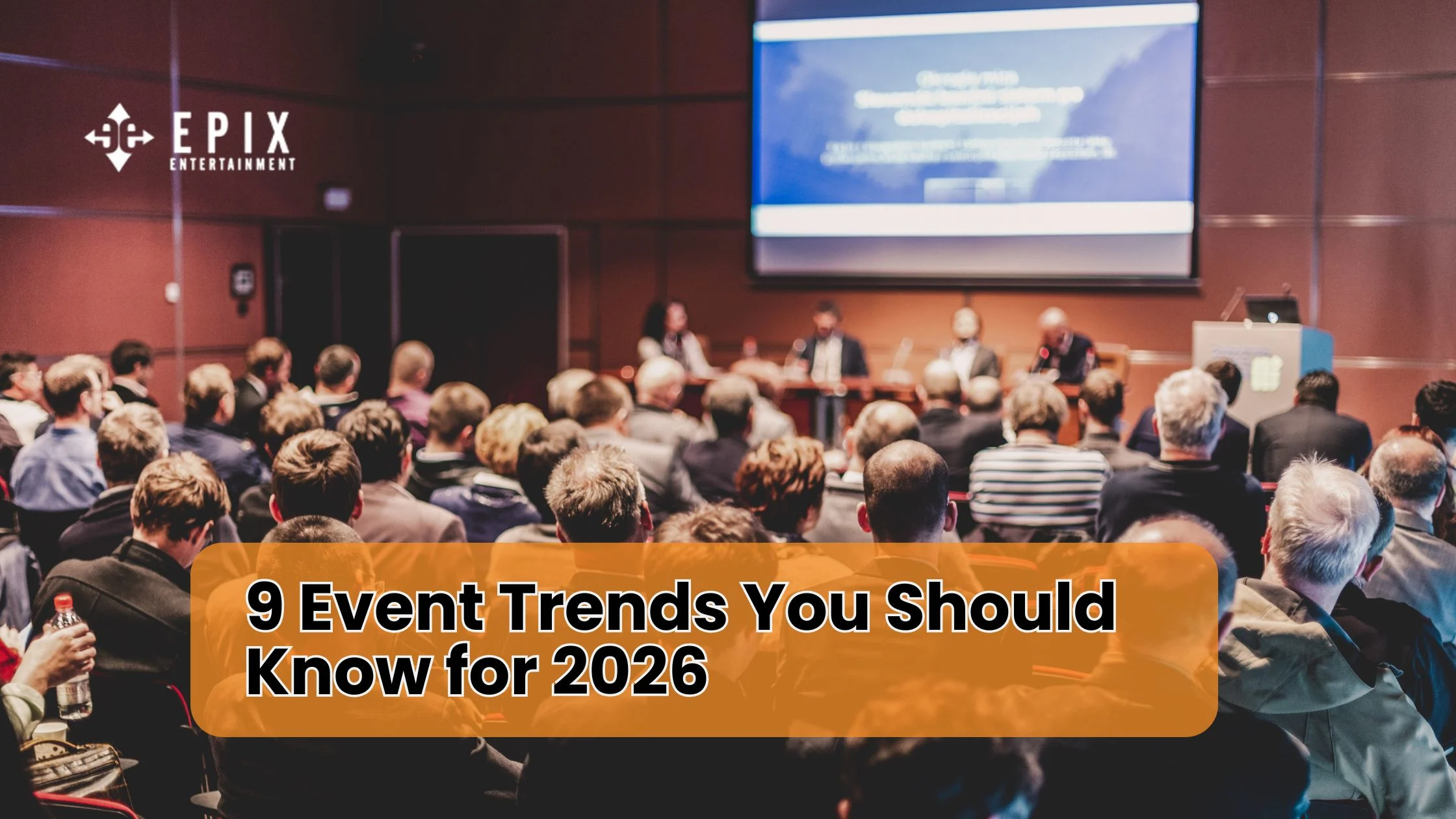
In early 2026, the corporate events landscape feels almost unrecognizable compared to five years ago. I remember standing at a leadership summit in Chennai late last year, watching executives scan QR codes for personalised agendas and real‑time interaction. Meanwhile, remote employees were seamlessly contributing via live digital hubs. The experience was dynamic, adaptive, and deeply engaging — and it marked something fundamental: events have evolved beyond logistics into emotion, connection, technology, and purpose.
If you’re planning corporate events — whether internal conferences, hybrid launches, employee engagement days, or partner meets — knowing the trends that are shaping the next year isn’t just helpful… it’s essential. Here are the 9 event trends you must know for 2026, backed by industry research and practical relevance for organisations looking to make events strategic, memorable and impactful.
Hybrid and Phygital Experiences Become the Norm
Hybrid event formats are no longer experimental add‑ons; they are foundational. Live, in‑person gatherings are complemented by digital participation so that distance no longer limits engagement. According to industry reports, hybrid events grew sharply in 2025 and continue to be a dominant model in 2026 as organisations strive for both reach and experience.
These phygital events are not just about livestreaming sessions — they integrate real‑time audience interaction, virtual networking lounges, and synchronized event moments that make both online and offline attendees feel equally present.
Why it matters: Hybrid formats remove geographical barriers, helping companies connect teams across India and beyond without diluting engagement.
Explore how hybrid formats fit into corporate strategies with our Corporate Event Management services.
AI Becomes Operational and Human‑Centred
Artificial intelligence is finally moving out of the “nice‑to‑have” category and straight into the core workflow of event planning and execution. Tools powered by AI now help curate personalised agendas, optimise content delivery, and even guide attendee suggestions in real time.
Instead of replacing planners, AI lets them focus on high‑value strategy while automating tedious tasks like scheduling, matchmaking and feedback summarisation.
Why it matters: Attendees expect personalised relevance. AI makes that possible without ballooning budgets or manual effort.
Immersive & Experiential Formats Over Traditional Setups
The era of rigid stages and static presentations is giving way to interactive experiences and immersive environments where attendees participate rather than just observe. Experiential elements include interactive demo lounges, themed brand theatres, simulation spaces and multi‑sensory storytelling techniques that make events feel something instead of just deliver information.
Companies that embed experiences into programming see higher engagement scores and deeper emotional resonance with attendees.
Why it matters: Memory is emotional. When an experience feels immersive, it stays with people long after the event ends.
Personalisation Drives Attendee Journeys
Gone are one‑size‑fits‑all event agendas. In 2026, event technologies and data systems allow planners to tailor experiences based on each attendee’s preferences, interests and professional goals. This includes smart networking suggestions, customised session tracks, and AI‑driven agenda paths that feel personally relevant.
This rise in personalised experiences influences satisfaction, participation and perceived value.
Sustainability Moves From Choice to Expectation
Environmental consciousness is no longer a “nice add‑on” — it’s a core consideration. Corporate clients and attendees increasingly want events to reflect responsible practices. From waste reduction and carbon‑neutral venues to plant‑forward menus and digital materials, sustainable event design enhances brand perception.
This shift also resonates with younger professionals who expect purpose‑driven corporate experiences.
Wellness and Human‑Centred Design Takes Priority
Corporate attendees are not just looking for content — they are looking for well‑being. Short sessions, designated quiet zones, mindfulness breaks and physical activity options are becoming standard features of thoughtfully designed events.
This human‑centric approach enhances energy, focus and engagement throughout the event day.
Why it matters: Attendees who feel cared for perform better, network more, and return with stronger brand affinity.
Purpose‑Driven & Brand‑Aligned Programming
Events in 2026 are becoming vehicles for organisational values and storytelling, not just information‑sharing platforms. Companies are crafting experiences that reflect their mission, culture and social commitments. (npu.co)
This includes themed programming, curated content tracks, and immersive sessions that tie back to brand identity.
Why it matters: Purpose makes events memorable — and meaningful experiences foster loyalty and alignment.
Smaller, Targeted “Micro‑Events” Gain Traction
While large gatherings have their place, many organisations are introducing smaller, highly targeted events that deliver deeper engagement and faster ROI. These micro‑events include roundtables, niche workshops and regional meetups.
They drive stronger connections and more action‑oriented dialogue.
Why it matters: Focused formats respect time while increasing participation quality.
Hybrid Networking & Smart Matchmaking
Networking is evolving beyond awkward meet‑and‑greets. Intelligent networking tools now use attendee profiles to suggest meaningful connections based on interests and professional alignment. AI match suggestions and structured networking sessions ensure attendees make real connections rather than random conversations.
This trend fosters purposeful interaction and higher engagement.
Why it matters: Better networking means more business outcomes — and deeper community building.
How These Trends Translate to Better Corporate Outcomes
Understanding trends is one thing — applying them strategically is what creates impact.
Here’s what organisations are seeing when they adopt these shifts:
- Higher attendee satisfaction scores — because experiences feel personalised and engaging
- Improved knowledge retention — through experiential and immersive formats
- Enhanced brand perception — when events reflect values, wellness and purpose
- Better ROI — through data insights and quality networking
- Greater global reach — with hybrid and phygital models
These outcomes are not speculation — they are backed by ongoing industry research and practice.
Why Companies in Chennai Choose Epix Entertainment for Trend‑Forward Events
Corporate event trends are exciting but trends without execution are just ideas.
At Epix Entertainment, we help organisations turn trends into memorable experiences that deliver real results. Our deep experience in Chennai and India, combined with strategic planning, technology integration, and creative design, ensures that your events are not just current, but future‑ready.
Whether it’s immersive hybrid gatherings, sustainability‑led programmes, wellness‑focused design, or AI‑powered personalisation, Epix brings strategy and execution together seamlessly.
Conclusion
Events in 2026 are no longer transactional gatherings — they are strategic, immersive experiences shaped by data, design, technology and purpose. Companies that understand and act on emerging trends can create unforgettable moments that resonate with attendees and drive measurable business impact.
Whether you are planning hybrid conferences, experiential activations, wellness‑centric corporate gatherings, or purpose‑driven team meets, understanding these trends will shape your success in 2026.
At Epix Entertainment, we are excited to help you navigate these trends and design events that don’t just happen — they matter
Turn Insights Into Action: Plan Your Next Trend‑Driven Event
Ready to make your 2026 corporate events more engaging, strategic and impactful?
Connect with Epix Entertainment to design and execute events that align with emerging trends and deliver real business results.