
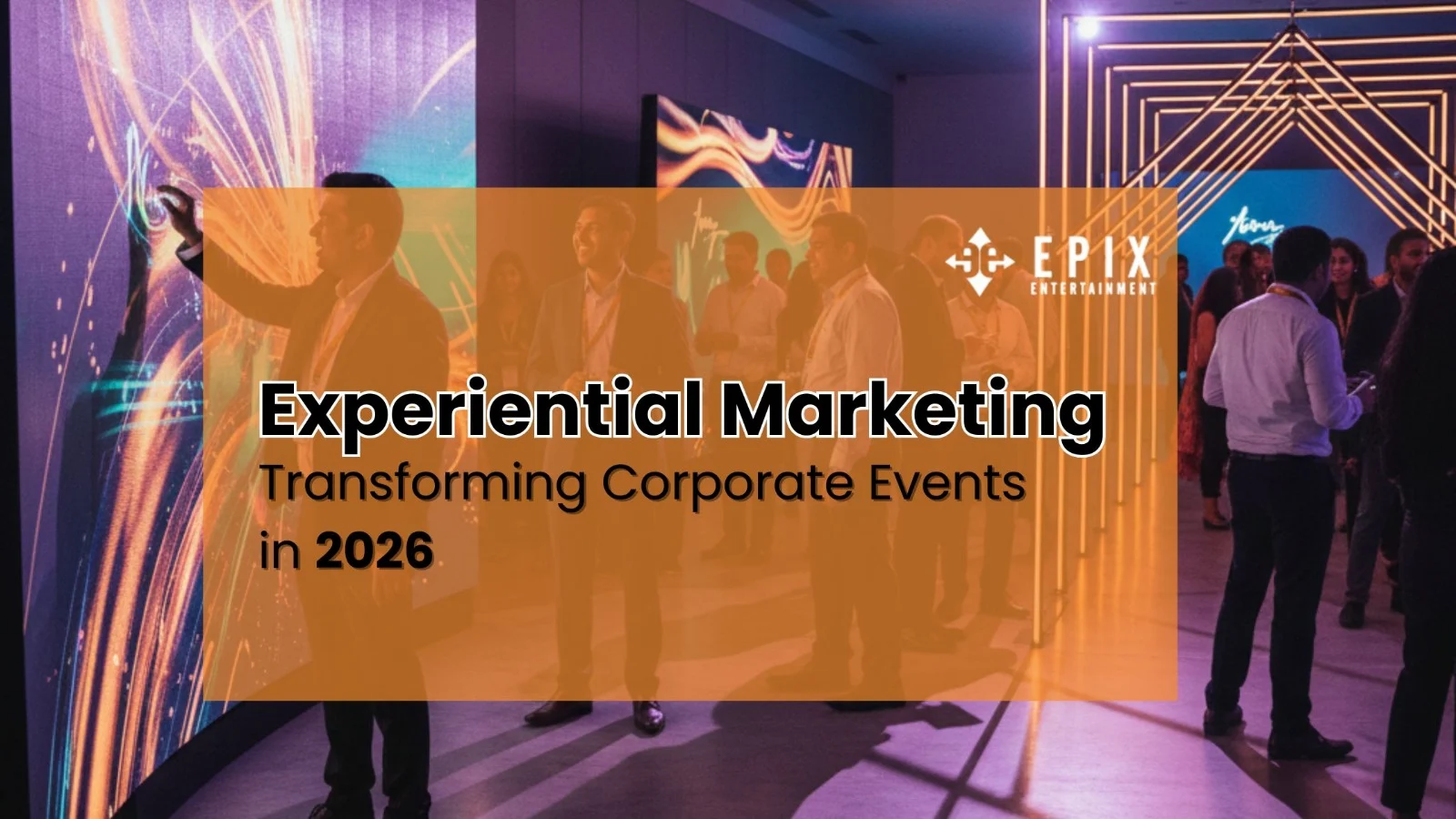
Corporate events have traditionally been about schedules, presentations, and logistics. But in 2026, a shift is taking place. Companies are moving beyond standard meetings and dinners to create experiences that leave a lasting impression. Imagine walking into a product launch where every detail—from lighting to sound to interactive zones—makes you feel like a part of the story. That’s the power of experiential marketing.
At Epix Entertainment, we help businesses in Chennai and across India design events that are immersive, engaging, and strategically aligned with their brand goals. Here’s how experiential marketing is reshaping corporate events and why it should be at the heart of your next gathering.
What Is Experiential Marketing in Corporate Events?
Experiential marketing is all about creating memorable, participatory experiences. Unlike traditional corporate events, which rely heavily on slideshows and speeches, experiential marketing focuses on immersing attendees in the brand story. From interactive product demos to gamified breakout sessions, it turns participants from passive observers into active collaborators.
Why Experiential Marketing Is Taking Center Stage in 2026
Attendees expect more than information—they seek connection, engagement, and inspiration. Recent research shows that 68% of participants retain brand messaging better when involved in interactive experiences. Hybrid and phygital formats are also gaining traction, combining live events with virtual engagement to reach wider audiences.
Epix Entertainment has helped several corporate clients in Chennai integrate data-driven engagement strategies, ensuring each attendee’s experience is both memorable and measurable.
6 Ways Experiential Marketing Is Transforming Corporate Events
1. Personalized Interaction Over Passive Observation
Attendees now expect to participate actively. From live polls to product demos, interaction keeps engagement levels high and drives brand recall.
2. Multi-Sensory Experiences
Events are designed to engage all senses—soundscapes, lighting, scent zones, and tactile elements ensure the experience sticks in memory long after it ends.
3. Storytelling at the Core
Every corporate event becomes a narrative journey, moving attendees emotionally rather than just providing information. Interactive storytelling corners, case study presentations, and live experiences all contribute to a compelling story.
4. Hybrid + Phygital Experiences
Combining in-person and virtual engagement allows participants to connect regardless of location. QR-based interactivity, live polls, and streaming sessions make every attendee feel involved.
5. Data-Driven Immersion
Experience metrics and engagement tracking allow brands to measure ROI in ways traditional events never could. Epix integrates feedback loops and engagement analytics seamlessly.
6. Micro-Moments Build Macro Impact
Even small experiential touches—like interactive kiosks or branded takeaways—contribute to a larger emotional impact, reinforcing your brand story in memorable ways.
Real-Life Examples of Experiential Marketing in Action
- Product Launch in Chennai: An immersive demo zone allowed attendees to interact with the product using AR technology, generating buzz and social media engagement.
- Leadership Summit: Hybrid breakout sessions created collaborative environments, with live streaming enabling remote teams to participate in real-time.
- Employee Engagement Offsite: Gamified team-building exercises helped internal teams connect while reinforcing company culture.
These experiences are not only engaging but measurable, ensuring every effort aligns with business objectives.
Building Experiential Events That Deliver Results
Creating an effective experiential event requires strategy:
- Set clear objectives: What should attendees feel, learn, or do?
- Map the attendee journey: Design touchpoints that guide and engage participants.
- Measure engagement: Use analytics and feedback to refine future events.
- Balance creativity with logistics: Ensure smooth execution without compromising impact.
At Epix Entertainment, we specialize in transforming ideas into immersive, measurable events that resonate with audiences and reflect brand values.
Common Mistakes in Experiential Corporate Events
Even well-intentioned events can fall flat. Avoid these pitfalls:
- Lacking a clear strategy for engagement
- Overcomplicating technology, leading to confusion
- Ignoring attendee feedback
- Poor alignment with brand identity
- Underestimating the logistics required for smooth execution
Epix ensures every detail, from planning to execution, aligns with your brand objectives.
Why Companies in Chennai Trust Epix Entertainment
With years of experience in corporate event management, brand activations, and on-ground activations, Epix combines creativity with precision. Our team understands local culture, regional nuances, and corporate expectations, delivering events that are immersive, impactful, and seamless.
Whether it’s a product launch, employee engagement program, or leadership summit, Epix creates events that tell a story, engage participants, and leave a lasting impression
Conclusion
Experiential marketing is no longer an optional add on for corporate events. In 2026, it has become the core of how brands communicate, connect, and build long term relationships with their audiences. When people are invited to participate, feel, and interact, they remember the message, the brand, and the experience far more deeply than any presentation slide ever could.
For organizations in Chennai and across India, this shift is redefining how product launches, conferences, employee engagement programs, and leadership meets are planned and delivered. It is about creating moments that spark emotion, encourage conversation, and leave a lasting impression long after the event ends.
FAQ
1. What is experiential marketing in corporate events?
It is creating immersive, participatory experiences that engage attendees emotionally and intellectually.
2. How does experiential marketing improve engagement?
By actively involving participants, it increases recall, attention, and connection to your brand.
3. What are the latest trends in experiential events in 2026?
Hybrid experiences, multi-sensory engagement, micro-moments, and data-driven immersion are trending globally.
4. How do you measure the success of an experiential event?
Engagement metrics, feedback, social reach, and ROI analysis are used to evaluate impact.
5. Can experiential tactics work for virtual or hybrid events?
Yes, creative online and hybrid elements such as gamified activities and live interaction enhance participant experience.