
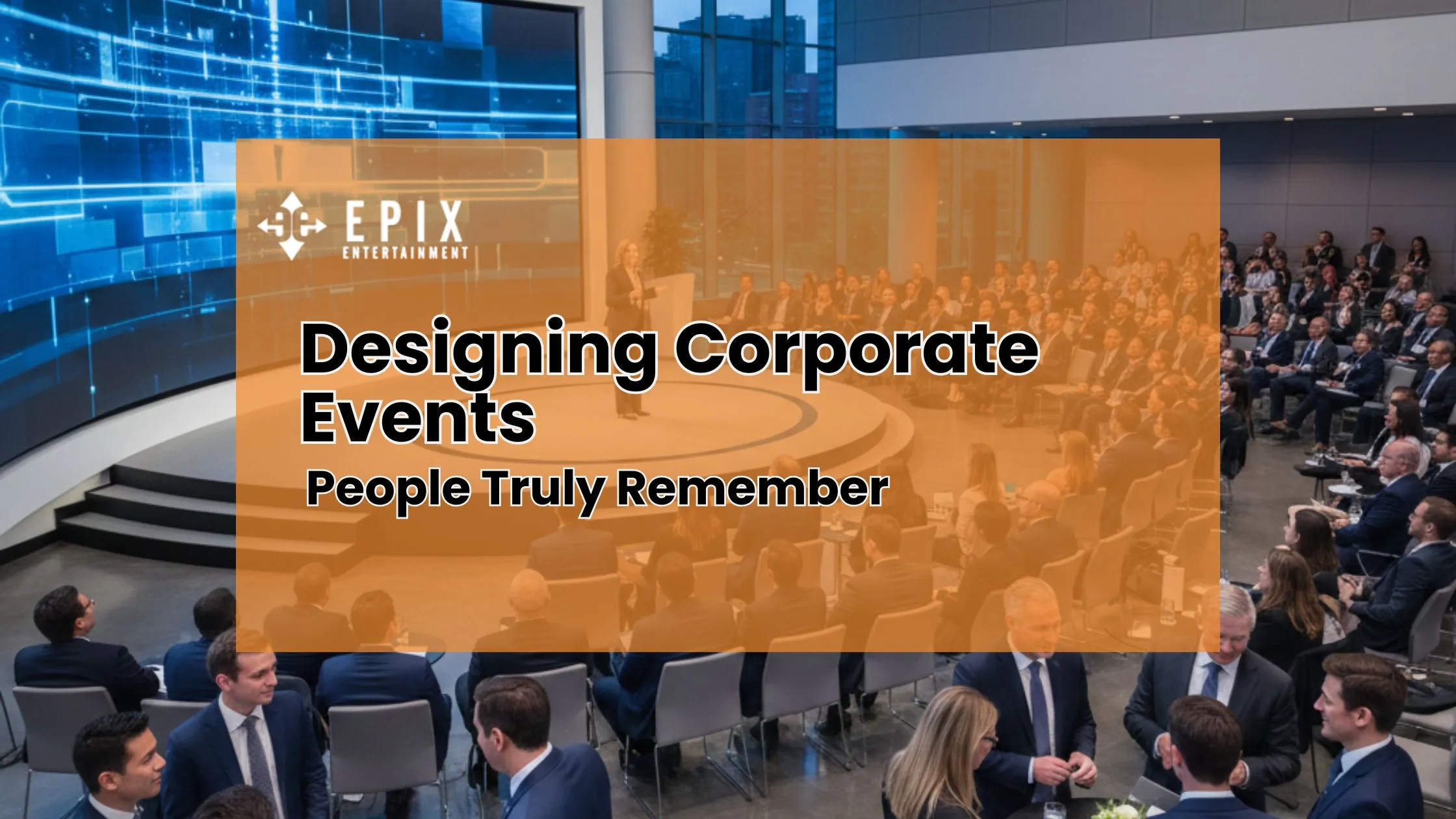
The ballroom was elegant. The lighting was flawless. The keynote was well rehearsed. Guests applauded politely.
And by Monday morning, nobody could remember what made the event special.
This is the quiet truth about many corporate events. They look impressive. They are executed smoothly. But they don’t leave a mark.
In today’s corporate environment, where attention spans are shorter and expectations are higher, designing a memorable corporate event requires more than good logistics. It demands strategy, psychology, storytelling, and measurable business alignment.
Whether you are planning an annual day celebration, a leadership conference, a product launch, or a stakeholder engagement event, the question is no longer “Was the event successful?” The real question is:
Did it create a lasting impression?
Let’s explore how to design corporate events that employees and stakeholders truly remember.
Why Most Corporate Events Fail to Create Impact
Many organizations invest heavily in corporate event planning. Yet the outcomes often feel temporary.
The most common reasons include:
- Overemphasis on décor and underinvestment in experience design
- Agenda overload with limited interaction
- Generic speeches without emotional connection
- No clear business objective
- Lack of post-event engagement
Corporate events today must do more than inform. They must engage, align, and inspire.
Research consistently shows that experiences tied to emotion and participation are retained far longer than passive sessions. When employees feel involved, not just present, the event becomes meaningful.
The Psychology Behind Memorable Corporate Events
Memorable events are not accidental. They are designed around how people think and feel.
Emotional Connection Drives Retention
People remember how an event made them feel more than what was said. A leader sharing a personal story. A recognition moment that feels genuine. A surprise element that breaks predictability.
Emotion transforms information into memory.
Participation Creates Ownership
When employees participate—through live polls, Q&A sessions, gamified challenges, or collaborative workshops—they shift from spectators to contributors. This sense of ownership significantly improves engagement and recall.
Storytelling Aligns People With Purpose
A corporate event without narrative feels like a schedule. A well-designed event feels like a journey.
From the opening moment to the final applause, every segment should build toward a central theme aligned with business goals.
A Strategic Framework for Designing Unforgettable Corporate Events
Here is a practical framework used by leading organizations and professional event partners.
1. Start With the Business Objective
Before booking venues or planning entertainment, define the core purpose.
Is the goal to:
- Motivate employees?
- Launch a new product?
- Strengthen stakeholder trust?
- Celebrate milestones?
- Align leadership vision?
Every design decision should flow from this objective.
At Epix Entertainment, strategic alignment is the starting point of every corporate event we design.
2. Understand Your Audience Deeply
A CXO audience expects strategic depth.
Employees expect inspiration and recognition.
Channel partners expect clarity and a growth vision.
Designing a memorable corporate event means tailoring content, tone, and format to the audience’s psychology.
A one-size-fits-all format rarely creates impact.
3. Build a Narrative, Not Just an Agenda
Think of your event as a story with three acts:
Opening: Capture attention with a strong theme or emotional hook.
Middle: Deliver engagement through interactive sessions, workshops, or immersive segments.
Closing: End with a powerful takeaway or action-driven message.
When events are structured like stories, attendees remain invested from start to finish.
4. Design Interactive Touchpoints
Modern corporate events are no longer passive.
Incorporate:
- Live audience polling
- Leadership Q&A sessions
- Gamified team challenges
- Experience zones
- Hybrid participation tools
These interactive elements significantly increase engagement.
5. Create Shareable, Experiential Moments
In 2026, events extend beyond physical venues. They live on social platforms, internal communication channels, and company culture.
Memorable events include:
- Branded experience installations
- Interactive digital walls
- Photo-friendly storytelling zones
- Personalized recognition moments
These elements make events both memorable and shareable.
6. Measure ROI and Engagement
Corporate event success should be measurable.
Track:
- Attendance and participation rates
- Engagement metrics
- Feedback scores
- Social mentions
- Post-event performance alignment
When events are measured strategically, they evolve from expenses to investments.
Corporate Event Trends Shaping 2026
To design events that people remember, it is essential to stay aligned with current trends.
Hybrid Event Experiences
Hybrid formats allow seamless participation from multiple locations, expanding reach without sacrificing engagement.
Personalization
Customized agendas, curated experiences, and audience segmentation enhance connection.
Sustainability-Focused Planning
Eco-conscious event design reflects brand responsibility and resonates with modern stakeholders.
Wellness Integration
Incorporating mindfulness sessions, experiential relaxation zones, or movement breaks improves engagement and energy.
Data-Driven Event Strategy
Advanced analytics now guide content optimization, attendee engagement tracking, and future planning.
Organizations that integrate these trends remain ahead of the curve.
Types of Corporate Events That Leave a Lasting Impression
Different objectives require different formats.
Annual Day Celebrations
Recognition-focused events build morale and reinforce culture.
Product Launch Events
A compelling launch builds anticipation, credibility, and market positioning.
Leadership Conferences
Strategic alignment events strengthen decision-making and clarity across leadership teams.
Townhall Meetings
Transparent communication builds trust and confidence within the organization.
Brand Activation Events
Experiential marketing strengthens external stakeholder engagement.
Common Mistakes to Avoid in Corporate Event Planning
Even well-funded events can underperform due to avoidable errors:
- Overcrowded agendas
- Excessively long speeches
- Poor audience interaction
- Ignoring technical production quality
- No post-event communication strategy
Memorable corporate events require clarity, creativity, and professional execution.
Why Strategic Event Design Matters for Corporates in Chennai
Chennai has emerged as a strong corporate and industrial hub, hosting technology firms, manufacturing leaders, and multinational organizations.
As competition for talent and market visibility increases, corporate events have become powerful tools for:
- Employer branding
- Employee retention
- Stakeholder communication
- Multi-city rollout consistency
Partnering with an experienced corporate event management company in Chennai ensures local expertise combined with national execution capability.
How Epix Entertainment Designs Events That Stay With People
At Epix Entertainment, event design begins with a simple belief:
Events are not just gatherings. They are strategic experiences.
With over 15 years of expertise and 1,500+ successful events executed across India, our approach combines:
- Strategic objective mapping
- Creative storytelling concepts
- Seamless on-ground execution
- Multi-city coordination
- Measurable engagement outcomes
From corporate conferences and employee engagement programs to brand activations and large-scale product launches, our focus remains consistent — creating experiences aligned with business growth.
Ready to Design a Corporate Event That Truly Makes an Impact?
If your next corporate event needs to do more than just fill a calendar—if it must inspire, align, and deliver measurable results — the right strategy makes all the difference.
Let’s design an experience your employees and stakeholders will remember long after the applause fades.