
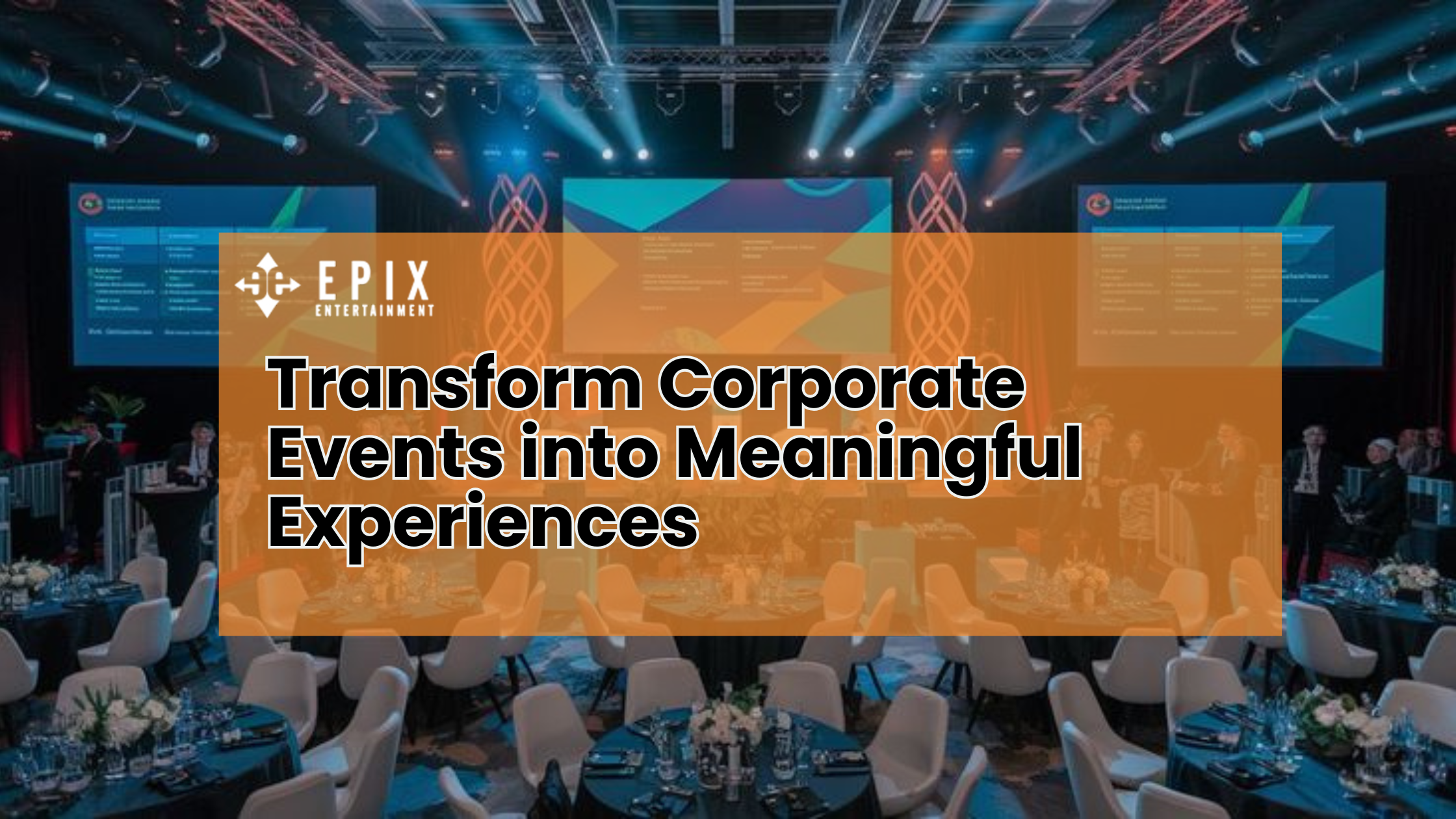
Corporate events have long been considered an important touchpoint for companies, whether it’s to engage employees, build stronger client relationships or showcase brand identity. Many events, however, follow a predictable pattern: they are well organized and quickly forgotten. And the difference between the way a standard event is experienced versus one that is truly impactful.
Today businesses are moving away from logistics-driven planning and are focused on creating immersive and memorable experiences. This is a change that demands a more considered approach where strategy, creativity and execution are seamlessly linked. From designing the right concept to assessing the real impact, every step has an important role in the perception and memory of an event.
The Shift from Events to Experiences
The expectations surrounding corporate events have changed dramatically. Once a formal gathering or routine function, no longer catches the eye or drives engagement. Today’s audiences want more engagement, more personalization, and more value.
This is where the role of corporate event management companies becomes more strategic than ever. It’s no longer about organizing an event; it’s about designing an experience that resonates with the audience and aligns with business goals. Events are now extensions of brand storytelling, culture building, and relationship management.
Building the Right Concept
Every great event starts with a great idea. Without it the best run event can seem disconnected or uninspired. The concept is the basis for each choice, from design elements to engagement strategies.
A good concept is not just creative, it is purposeful. Whether the purpose of the event is to motivate employees, launch a product or increase brand awareness, this is in line with the purpose of the event. It also considers the audience what they are looking for, what will get them excited, and what will leave a lasting impression.
Usually, concept development is storytelling. When an event has coherence to its story, every detail feels purposeful, and the audience is participating in the story, rather than passively witnessing it.
Strategic Planning That Drives Outcomes
With the concept established, planning is the backbone of the whole process. Strategic planning ensures all parts of an event work together to achieve the desired outcome. This starts with clearly stating objectives. What does the organization want to accomplish? Is it engagement, visibility or relationship building? Having clarity at this stage is important so that decisions stay aligned throughout.
Planning also implies knowing your audience in depth. A corporate event for internal teams will be very different than one for clients or stakeholders. The customization is key here shaping the experience to meet the audience’s expectations and preferences.
Budget planning is another key factor. It is not just about allocating costs, but about prioritizing investments that enhance the overall experience. Good planning makes the best use of resources and does not compromise quality. Flexibility matters equally. Even the best of plans can go wrong. A good plan takes into account the challenges and builds in flexibility to keep the momentum going.
Design & Production: Bringing Ideas to Life
It’s in the design and production that ideas get to become physical. This stage is about taking abstract ideas and making them into something concrete for audiences to see, feel and interact with.
The mood of the event is significantly influenced by visuals such as stage design, lighting and branding. A good design means that everything fits the overall idea and nothing feels out of place. It is one experience.
Production is not just aesthetics. It’s technical accuracy. Sound systems, lighting and digital integrations need to be seamless to support the flow of the event. And that’s why detail is so important. Even the smallest technical glitch can affect the overall experience.
The key is to be consistent. Every element, from the entry points to the stage productions, should tell the same story and serve the same purpose. The event is immersive rather than fragmented as design and production are in sync.
Execution: Where Precision Matters
This is where all the planning and prep work is put to the test. It is where ideas become real-time experiences and precision becomes a critical factor.
Execution is successful when lots of teams are working together. Vendors, technical crews, event staff and coordinators. All the elements have to work in sync for a fluid flow. Time management is a HUGE factor here. Events are often on short timelines and even small delays can cause problems. A clear timeline and contingency plans keep control in check.
Execution is hard and one of the hardest parts is dealing with the unexpected. The success of the event is dependent on the ability to react quickly and efficiently, whether it’s technical glitches or last-minute adjustments. Execution is not just about delivering what was planned, but about ensuring the audience experiences it seamlessly, without knowing the complexities behind the scenes.
Engagement & Interaction: Creating Memorable Moments
if an event doesn’t engage its audience it’s not really an event. “Passive attendance is not enough anymore, people want to participate, interact and feel involved.
Engagement can be delivered through a range of components including interactive activities, live experiences and audience led segments. These moments offer participation and help make the event more lively. Emotional connection is a big thing as well. If you connect with an event personally, you will probably remember it. This can be storytelling, immersive environments or shared experiences that bring people together.
“You want people to feel like they’re in the event and not just watching it. When done well, engagement leaves a lasting impression that extends beyond the event.
Measuring Impact & Event Success
A successful event is not only one that runs smoothly, it is one that is measurable. An event’s impact needs to be understood to determine its success and to plan for the future.
Metrics like audience engagement, participation levels, and feedback are valuable insights. These indicators are used to determine if the event met its objectives.
And not only in the immediate feedback, but the long-term impact as well. Did the event help build relationships? Did it boost the brand image? Has it helped achieve business goals? After the event, organizations can evaluate what was successful, and what can be improved. It’s this constant learning process that is key to creating better experiences over time.
Common Mistakes to Avoid
Even with meticulous preparation, some errors can reduce an event’s impact. One of the most prevalent is beginning without a clear idea, which results in a lack of focus.
Overemphasizing logistics at the expense of the audience experience is another problem. Even if an event is well-planned, people won’t remember it if they don’t participate. Inadequate preparation and a lack of coordination can also make execution difficult. Even minor problems can worsen in the absence of proper alignment.
Lastly, a lot of events don’t quantify their impact. It becomes challenging to determine the actual worth of the effort without assessing the outcomes. A balanced strategy that successfully combines strategy, creativity, and execution is necessary to avoid these errors.
Conclusion
Bringing meaningful experiences to corporate events is not just about organization, it’s about a thoughtful and strategic approach at every step. building a strong concept, executing with precision and measuring real impact all add to the overall success of the event. When done right, corporate events become powerful tools for engagement, communication, and brand building. They create moments that resonate with audiences and deliver lasting value to organizations.
This is where working with experienced professionals makes a difference. Epix Entertainment understands the importance of crafting events that go beyond expectations transforming them into impactful experiences that align with business goals and leave a lasting impression.