
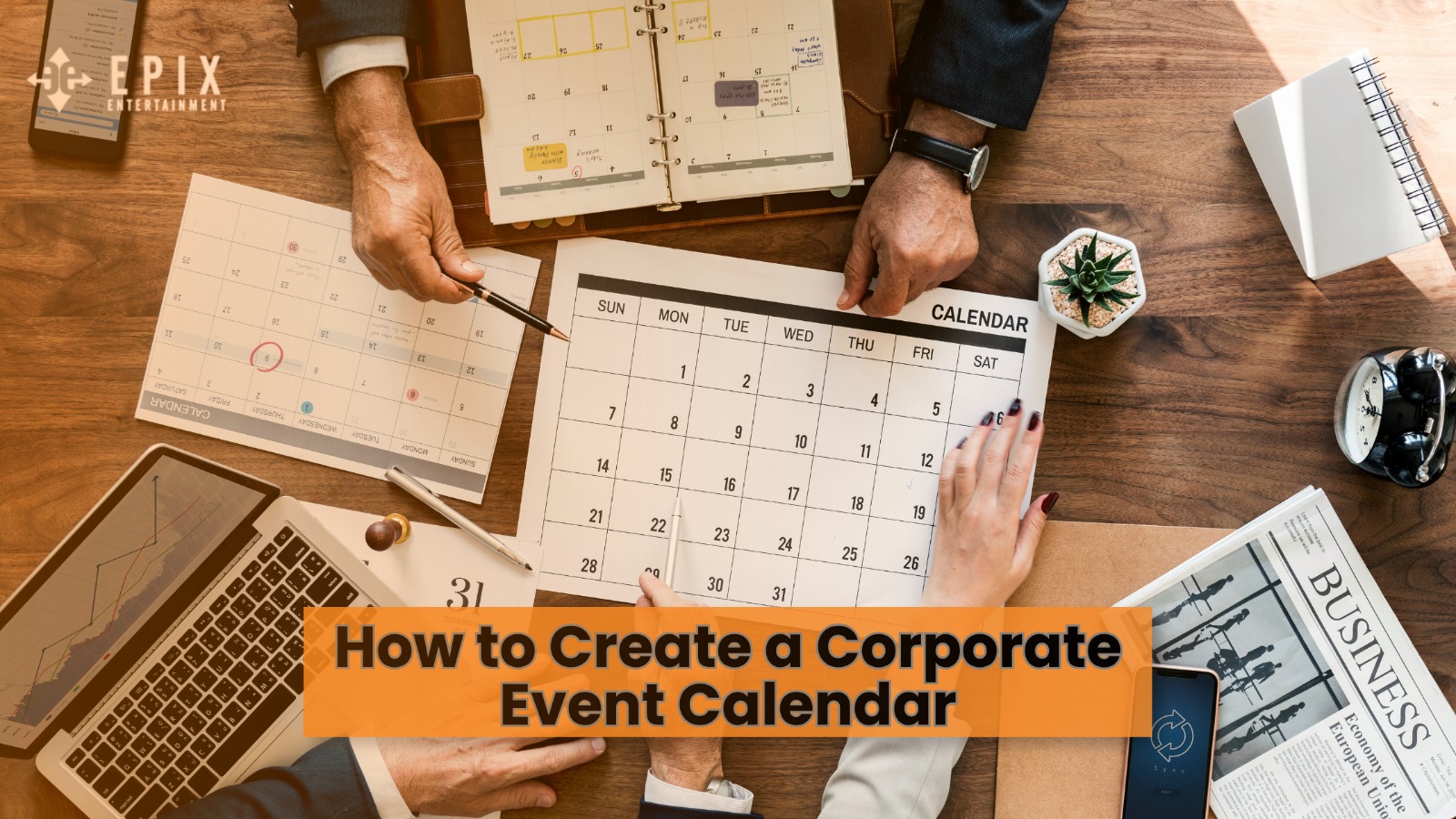
The success of a business event is never by chance. Every great conference, employee engagement program, product launch, or annual celebration has a well-planned itinerary that helps keep teams aligned and goals on track. “Organizations are continuously investing in experiences that strengthen workplace culture, enhance brand visibility, and build stronger stakeholder relationships, making a structured approach to event planning more important than ever.
A corporate event calendar is a strategic roadmap that helps businesses to organize activities throughout the year. Instead of booking ad hoc events, companies can develop an overall plan that is aligned with their objectives, optimizes resources, and ensures that each event serves a bigger function. Whether you are scheduling a few annual get-togethers or a busy calendar of business activities, a good calendar gives you clarity, consistency, and direction.
What Is a Corporate Event Calendar?
A corporate event calendar is a centralized calendar of all planned business events for a certain period of time, usually a year. It enables organizations to see what’s coming, align departments, and use resources effectively.
An event calendar is a strategic planning document, not just a scheduling tool. The tool helps leadership teams connect events with company priorities, identify engagement opportunities, and keep a healthy flow of activities going throughout the year. Businesses will have a clear picture of upcoming initiatives, avoiding overlaps, better preparing, and maximizing participation. A structured calendar also encourages transparency across departments so that everyone knows what’s ahead and can help to ensure success at execution.
Define Your Annual Event Objectives
Before adding dates to a calendar, it is essential to determine what each event is intended to achieve. Different events serve different purposes, and understanding those objectives provides direction during the planning process.
Some organizations may focus on strengthening employee engagement through team-building activities and recognition programs. Others may prioritize customer relationships through networking events, conferences, or industry exhibitions. Marketing teams may schedule product launches and promotional initiatives to increase brand awareness and generate leads.
Clearly defined goals help organizations make informed decisions about event formats, audiences, budgets, and expected outcomes. When objectives are established early, every event becomes part of a larger strategy rather than an isolated activity.
Identify Key Events Throughout the Year
The next step is to identify the most relevant events to the organization. Every company has its own priorities, but there are some common categories that are usually included in annual planning.
Leadership meetings and strategy sessions help align business goals and assess performance. Annual celebrations, wellness initiatives, and appreciation events all create an employee-centric environment that improves workplace culture and morale. Industry conferences, exhibitions, and networking opportunities give businesses a chance to reach out and build stronger professional relationships.
It’s also worth thinking about seasonal campaigns, product launches, client engagement initiatives, and training programs. Planning these events in advance allows organizations to have a balanced schedule and enough time to prepare for each initiative.
Create a Month-by-Month Event Schedule
Once event categories are identified, businesses can start to spread them out across the calendar year. The month by month view also gives a sense of frequency of events, workload, and scheduling conflicts.
The goal is to create a feasible schedule in line with the business process. An excess of activities in a short time period can overwhelm teams, resulting in decreased participation. But long gaps between events can also limit engagement opportunities.
When creating the schedule, organizations should consider industry trends, busy business periods, public holidays, and employee availability. By strategically scheduling events throughout the year, we can maintain momentum and ensure that each initiative receives the necessary attention and support. A well-balanced calendar allows teams to be productive and still have meaningful event experiences.
Allocate Budgets and Resources Early
Financial planning plays a crucial role in successful event management. Establishing budgets at the beginning of the planning cycle helps organizations avoid unexpected costs and make informed investment decisions.
Each event should have a clear allocation for venue expenses, production requirements, catering, entertainment, technology, and promotional activities. Early budgeting also provides flexibility when evaluating vendors and negotiating contracts.
Resource planning extends beyond finances. Businesses must consider staffing requirements, internal support teams, equipment needs, and external service providers. Understanding these requirements in advance reduces operational challenges and improves overall efficiency.
Organizations that plan budgets proactively are often better positioned to deliver high-quality experiences while maintaining financial control.
Establish Clear Timelines and Responsibilities
Even the most detailed event calendar is useless if there’s no proper accountability. Responsibility assignment means that each task has an owner and every milestone is monitored in the planning process.
Detailed timelines keep teams organized and help them stay on track. Duties may include planning for the venue, communication, vendors, registration of attendees, logistics and post-event assessment.
“Regularly scheduled meetings and status updates keep the stakeholders in alignment. Early responsibility-setting helps organizations mitigate the risk of missing details, improve collaboration, and reduce confusion. Having a structured workflow builds confidence and allows teams to focus on creating successful event experiences.
Use Technology to Manage Your Event Calendar
Technology has transformed the way businesses plan and manage events. Modern planning tools simplify scheduling, communication, collaboration, and reporting.
Digital platforms allow teams to track deadlines, share updates, monitor budgets, and manage event-related documentation in one centralized location. Calendar integrations help stakeholders stay informed about upcoming activities, while automated reminders reduce the likelihood of missed deadlines.
Technology also supports data collection and performance measurement. Attendance figures, participant feedback, and engagement metrics provide valuable insights that can guide future planning decisions.
By leveraging the right tools, organizations can improve efficiency and maintain greater control over complex event schedules.
Why Professional Event Planning Support Matters
Managing multiple business events throughout the year requires expertise, coordination, and attention to detail. As event programs become more sophisticated, many organizations choose to work with experienced professionals who can oversee planning and execution.
Companies looking for corporate event management in Chennai often seek support to streamline logistics, coordinate vendors, manage timelines, and deliver seamless attendee experiences. Professional guidance helps businesses maintain consistency across events while reducing the burden on internal teams.
Experienced event planners also bring valuable industry knowledge, creative ideas, and risk management capabilities that contribute to successful outcomes. Their support enables organizations to focus on strategic objectives while ensuring every event is executed efficiently.
Measuring Success and Refining Future Event Calendars
An effective event calendar should be flexible based on performance and feedback. The outcomes review helps organizations understand what worked well and what can be improved.
Some potential key metrics for evaluation include attendance, satisfaction, budget, engagement, and business impact. Getting input from employees, clients, and stakeholders can provide useful insight that can help inform future planning decisions. By analyzing results and documenting lessons learned, businesses can build stronger event strategies year after year. Continuous improvement helps keep the calendar in sync with organizational goals and changing audience expectations.
Conclusion
Creating a corporate event calendar is more than simply organizing dates on a schedule. It is a strategic process that helps businesses align activities with objectives, optimize resources, improve coordination, and deliver meaningful experiences throughout the year. With careful planning, clear responsibilities, and ongoing evaluation, organizations can create a structured framework that supports both operational efficiency and long term growth.
For businesses seeking expert guidance in planning and executing impactful corporate events, Epix Entertainment provides professional event management solutions designed to deliver seamless experiences and measurable results.