
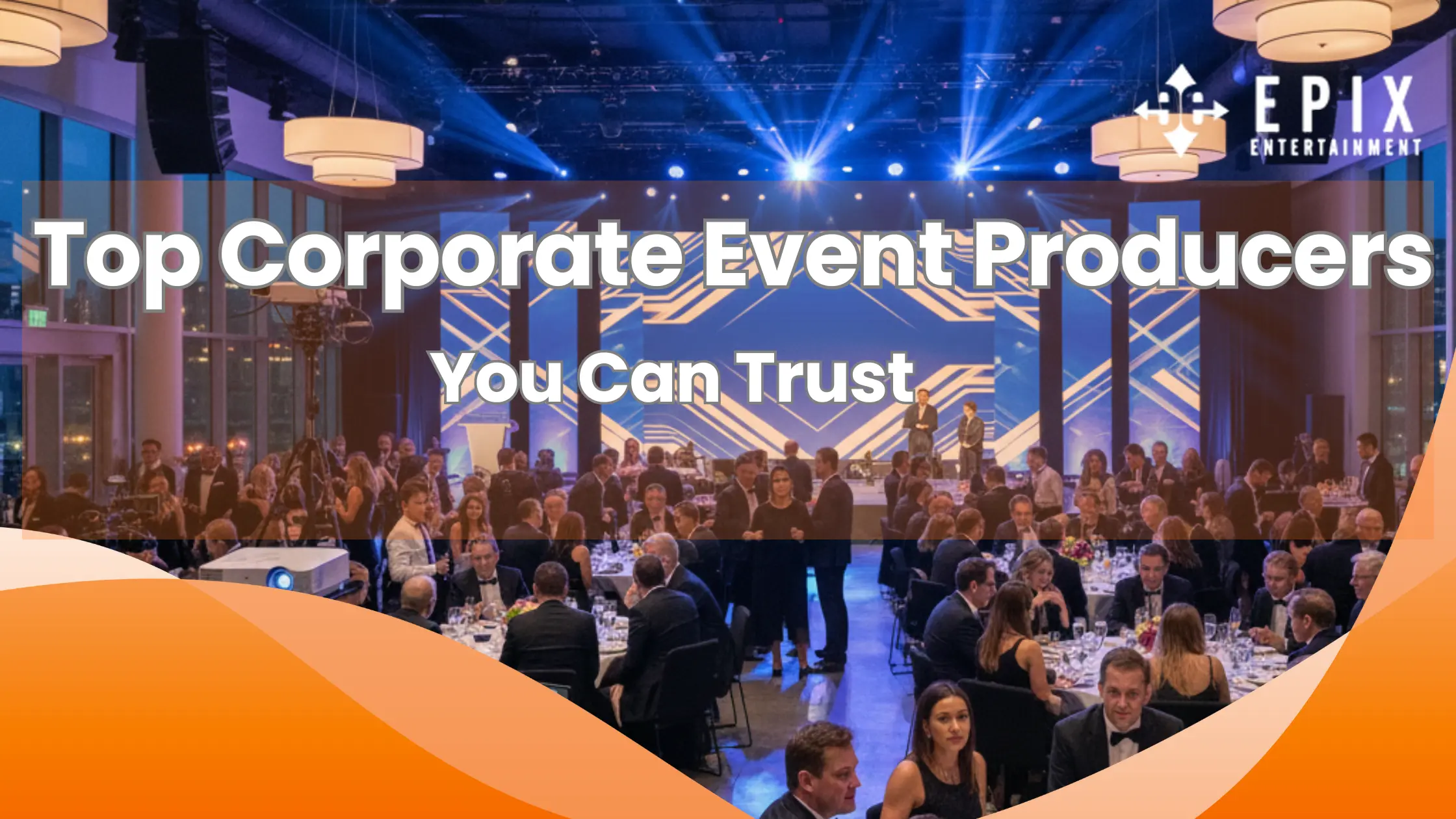
Corporate events have transformed from basic networking opportunities into sophisticated business instruments that directly impact revenue, brand positioning, and competitive advantage. As organizations navigate an increasingly complex marketplace, the pressure to deliver exceptional event experiences while demonstrating measurable ROI has never been more intense. The global event industry’s projected growth to $1.5 trillion by 2028 reflects this shift with corporate event spending reaching $169 per attendee per day in 2025, business leaders recognize that professional event production is no longer optional. It’s a strategic imperative that separates industry leaders from those left behind.
Whether you’re planning a product launch, annual conference, executive retreat, or brand activation, the difference between an ordinary event and an extraordinary experience lies in the expertise of your event production team. This comprehensive guide explores what sets elite corporate event producers apart, the measurable value they deliver, and how to select the right partner for your organization’s unique needs.
Understanding Corporate Event Producers: Roles and Responsibilities
What Do Corporate Event Producers Actually Do?
Corporate event producers are strategic partners who transform business objectives into immersive, memorable experiences. Unlike event coordinators who focus primarily on logistics, or event planners who handle day-to-day details, producers take a comprehensive approach that encompasses strategic vision, creative execution, and measurable outcomes.
Professional event producers manage every aspect of the event lifecycle:
Strategic Planning and Conceptualization: Aligning event design with business goals, developing themes that resonate with target audiences, and creating experiences that reinforce brand identity while driving engagement.
Vendor Management and Coordination: Leveraging established relationships with premium suppliers, negotiating favorable terms, and ensuring seamless coordination among multiple stakeholders to deliver quality experiences within budget.
Budget Optimization: Maximizing return on investment through strategic resource allocation, identifying cost-saving opportunities without compromising quality, and providing transparent financial reporting.
Risk Management and Contingency Planning: Anticipating potential challenges, developing backup plans for every critical element, and ensuring business continuity regardless of unexpected circumstances.
Post-Event Analytics and Reporting: Measuring success against predefined KPIs, gathering actionable insights for future improvements, and demonstrating clear ROI to stakeholders.
The corporate event production industry is experiencing remarkable growth. The events industry market attained a value of nearly $1,406 billion in 2024 and is projected to reach approximately $2,230.8 billion by 2034, with a CAGR of 5.1%. This expansion reflects the increasing recognition among business leaders that professional event production delivers measurable value. According to recent data, 65% of companies worldwide reported an increase in their spending on meetings and events in 2023, demonstrating renewed confidence in the strategic importance of live experiences.
Top Characteristics of Elite Corporate Event Producers
What Sets Leading Corporate Event Producers Apart?
The best corporate event producers distinguish themselves through a combination of strategic thinking, technical expertise, and proven execution capabilities. Here’s what separates industry leaders from the rest:
1. Strategic Vision and Creative Excellence
Top-tier producers don’t just execute your vision—they elevate it. They possess the ability to translate abstract business objectives into concrete event experiences that resonate emotionally while driving measurable outcomes. This requires deep understanding of brand storytelling, audience psychology, and emerging experience design trends.
Elite producers ask probing questions: What specific behaviors do you want to inspire? How should attendees feel when they leave? What conversations should continue long after the event concludes? Their creative concepts aren’t just visually impressive—they’re strategically designed to achieve your business goals.
2. Technical Expertise and Industry Knowledge
The event technology landscape has evolved dramatically. Approximately 86% of event marketing professionals agree that technology plays a crucial role in enhancing event outcomes. Leading producers stay ahead of these trends, mastering everything from hybrid event platforms and virtual reality integrations to advanced AV systems and real-time analytics tools.
Professional producers understand the technical requirements for different event formats, from intimate executive gatherings to large-scale conferences with thousands of attendees. They know which technologies enhance experiences and which merely add complexity without value.
3. Vendor Network and Relationship Management
Established corporate event producers bring more than just contacts—they bring trusted partnerships built over years of successful collaborations. These relationships translate into preferential pricing, priority access during peak seasons, and vendors who go above and beyond because they value the long-term partnership.
The right vendor network can mean the difference between a good event and a great one. When unexpected challenges arise—and they always do—producers with strong relationships can mobilize resources quickly, ensuring your event stays on track.
4. Data-Driven Decision Making
Modern event production isn’t based on intuition alone. For 95% of events teams, demonstrating event ROI is the top priority. Elite producers leverage data analytics throughout the event lifecycle, from predictive modeling during planning to real-time engagement tracking during execution and comprehensive ROI analysis post-event.
They establish clear metrics aligned with your business objectives, implement tracking mechanisms, and provide actionable insights that inform both immediate improvements and long-term strategy.
5. Crisis Management and Adaptability
The ability to handle unexpected challenges separates competent producers from exceptional ones. From last-minute venue changes to technical failures or weather emergencies, experienced producers maintain composure and implement contingency plans seamlessly.
The global pandemic demonstrated this capability dramatically. Event producers who successfully pivoted to virtual and hybrid formats, adapted quickly to changing regulations, and maintained attendee engagement despite unprecedented circumstances proved their value beyond question. 86.4% of organizers planned to maintain or increase the number of in-person events in 2025 compared to 2024, reflecting confidence in the industry’s adaptability and resilience.
Types of Corporate Events and Production Requirements
Corporate Events That Demand Professional Production
Professional corporate event producers excel across diverse event types, each with unique production requirements and success metrics:
Product Launches and Brand Activations: These high-stakes events require flawless execution, creative storytelling, and strategic media engagement. Producers coordinate everything from reveal sequences to influencer management, ensuring your product introduction generates maximum impact and memorable experiences.
Annual Conferences and Summits: Large-scale conferences demand sophisticated logistics, content programming, speaker coordination, and attendee engagement strategies. Producers manage complex timelines, multiple tracks, breakout sessions, and networking opportunities while maintaining cohesive branding throughout.
Executive Retreats and Board Meetings: Intimate, high-level gatherings require discretion, attention to detail, and environments conducive to strategic thinking. Producers curate experiences that balance productivity with relationship building, selecting venues and designing agendas that facilitate meaningful conversations.
Award Ceremonies and Galas: These celebratory events blend entertainment, recognition, and brand reinforcement. Producers orchestrate everything from dramatic staging and lighting design to video production and presenter coordination, creating memorable moments that strengthen organizational culture.
Trade Shows and Exhibitions: Standing out in competitive exhibition environments requires strategic booth design, interactive demonstrations, lead capture systems, and staff training. Producers ensure your presence generates qualified leads while reinforcing brand positioning.
Team-Building Experiences: Effective team development events balance structured activities with organic relationship building. Producers design experiences that strengthen collaboration, communication, and trust while ensuring activities align with organizational culture and values.
The production requirements vary significantly based on scale. In 2024, Corporate Events led the event type category with 44%, driven by rising business activities and professional gatherings, demonstrating the sustained demand for professional production services.
Current trends show increasing adoption of hybrid formats, combining in-person and virtual elements. 38% of event organizers say hybrid events require more preparation time than solely in-person or virtual events, underscoring the importance of experienced producers who understand both modalities.
Sustainability has also become a critical consideration. More than 50% of companies are lowering their event emissions by reducing waste and prioritizing recyclable materials, with producers increasingly incorporating eco-friendly practices into event design and execution.
The Corporate Event Production Process: A Behind-the-Scenes Look
How Top Corporate Event Producers Deliver Excellence
Understanding the production process helps organizations appreciate the complexity and strategic thinking required for successful events. Here’s how elite producers approach each phase:
Phase 1: Discovery and Strategy (4-6 weeks before)
The foundation of any successful event begins with comprehensive discovery. Producers conduct stakeholder interviews, analyze past event performance, and identify specific business objectives. This phase establishes clear success metrics, budget parameters, and strategic direction.
Key activities include competitive analysis, audience profiling, objective definition, and preliminary budget framework development. The goal is creating shared understanding between your organization and the production team about what success looks like and how to measure it.
Phase 2: Creative Development (3-4 weeks before)
With strategy established, producers develop creative concepts that bring your vision to life. This includes theme development, venue selection and layout planning, content programming, speaker curation, and visual identity design.
Leading producers present multiple concepts, each with detailed execution plans, budget implications, and expected outcomes. They don’t just show you what the event will look like—they explain why each element matters and how it contributes to your objectives.
Phase 3: Logistics and Coordination (2-3 weeks before)
This intensive phase involves translating creative vision into operational reality. Producers finalize vendor contracts, coordinate technical requirements, develop detailed timelines and run-of-show documents, and conduct site visits to identify potential challenges.
The level of detail during this phase separates professional producers from amateurs. Elite teams create comprehensive production books covering every conceivable scenario, ensuring smooth execution regardless of circumstances.
Phase 4: Execution (Event Day)
During the event, producers orchestrate behind-the-scenes coordination while you focus on engaging with attendees. They manage vendor performance, troubleshoot technical issues, adjust timelines as needed, and ensure every element delivers as planned.
Professional producers maintain constant communication among team members, anticipate needs before they become problems, and make real-time adjustments invisible to attendees. Their presence ensures seamless experiences from arrival through departure.
Phase 5: Post-Event Analysis (1-2 weeks after)
The event doesn’t end when attendees leave. Comprehensive post-event analysis evaluates performance against established KPIs, gathers stakeholder feedback, identifies improvement opportunities, and documents lessons learned.
Elite producers deliver detailed reports including attendance analytics, engagement metrics, budget reconciliation, and ROI analysis. These insights inform future event strategy and justify continued investment in professional production services.
Measuring Success: ROI and Key Performance Indicators
How to Evaluate Your Corporate Event Producer
Demonstrating measurable return on investment has become essential for justifying event expenditures. 38.2% of organizers reported difficulty demonstrating ROI for B2B conferences, down from 45.4% in 2023, indicating improving measurement capabilities across the industry.
Attendee Satisfaction Scores: Survey data revealing how participants perceived the event experience, including content relevance, logistical execution, and overall value. High satisfaction correlates with continued engagement and positive word-of-mouth.
Lead Generation and Conversion Rates: For sales-focused events, tracking qualified leads generated and their progression through the sales pipeline provides direct ROI measurement. Professional producers implement systems for capturing and nurturing these leads effectively.
Media Coverage and Social Engagement: Measuring earned media impressions, social media reach, engagement rates, and sentiment analysis quantifies brand visibility and reputation impact generated by the event.
Cost Per Attendee: Analyzing total event investment divided by attendance provides efficiency metrics for comparing events over time and benchmarking against industry standards.
Net Promoter Score (NPS): Gauging attendee likelihood to recommend your events or organization measures long-term relationship strength and predicts future engagement.
Business Objectives Achievement: The most meaningful metrics directly tie to your stated goals, whether that’s closing deals, launching products successfully, strengthening partnerships, or enhancing brand perception.
Research indicates that 48% of brands realize a ROI of between 3:1 to 5:1 with their events and experiences, demonstrating the substantial returns possible with professional production. However, it’s important to note that over 40% of event ROI comes from long-term brand perception and downstream impact not immediate sales, emphasizing the importance of measuring both direct and indirect returns.
2025 Trends in Corporate Event Production
Future-Forward Approaches from Leading Producers
The corporate event landscape continues evolving rapidly, with several key trends shaping how leading producers approach event design and execution:
AI and Automation in Event Planning: Artificial intelligence is transforming event logistics, from automated attendee matching for networking to predictive analytics that optimize scheduling and resource allocation. Smart producers leverage these tools to enhance personalization while reducing administrative burden.
Sustainable and Eco-Friendly Event Practices: Environmental responsibility has moved from optional to expected. Forward-thinking producers integrate sustainability throughout event design, from zero-waste catering and carbon-neutral transportation to digital-first materials and venue selection based on environmental credentials.
Immersive Technologies: Augmented reality, virtual reality, and holographic presentations create memorable experiences that transcend traditional event formats. Augmented reality (AR) and virtual reality (VR) adoption surged by 18% in 2024, with these technologies enabling everything from virtual venue tours to interactive product demonstrations.
Personalization Through Data Analytics: Leveraging attendee data to customize experiences, content recommendations, and networking opportunities creates more relevant, engaging events. Advanced producers use behavioral data and preference profiles to tailor every touchpoint.
Wellness-Focused Event Design: Recognition that attendee wellbeing impacts engagement has led to incorporating wellness elements—from healthy catering and movement breaks to mindfulness sessions and stress-reduction activities—into corporate events.
Hybrid Event Optimization: Rather than treating hybrid as “emergency virtual,” sophisticated producers design intentional hybrid experiences where both in-person and remote attendees receive equally engaging, valuable experiences tailored to their participation mode.
Looking ahead, the global event industry is projected to surpass $1.5 trillion by 2028, driven by a remarkable CAGR of 11.2%, with technology adoption and experiential innovation fueling this growth.
Choosing the Right Corporate Event Producer: A Decision Framework
Essential Questions to Ask Before Hiring
Selecting the ideal corporate event producer requires careful evaluation across multiple dimensions. Here’s a comprehensive decision framework:
Portfolio and Case Studies Review: Examine their previous work, focusing on events similar in scale, format, and objectives to yours. Look for creativity, execution quality, and demonstrated results. Ask for client references and follow up with detailed conversations about their experience.
Industry Specialization and Experience: While versatile producers can handle diverse events, those with deep experience in your specific industry or event type bring valuable insights and established relationships. Consider whether they understand your audience, competitive landscape, and business challenges.
Technology Capabilities: Evaluate their technical expertise, from event management platforms and registration systems to hybrid event technology and engagement tools. Ensure they stay current with emerging technologies and can recommend appropriate solutions for your needs.
Budget Transparency and Flexibility: Professional producers provide detailed budget breakdowns, explain their fee structure clearly, and demonstrate ability to work within various budget parameters. They should present options at different price points while maintaining quality standards.
Communication and Responsiveness: Throughout the selection process, assess their communication style, responsiveness to inquiries, and ability to listen actively. These patterns predict how they’ll perform during actual event production when clear, timely communication becomes critical.
Crisis Management Protocols: Ask about their approach to risk management, contingency planning, and handling unexpected challenges. Request specific examples of how they’ve successfully navigated crises during past events.
Red Flags to Watch For: Be cautious of producers who lack clear processes, communicate poorly or inconsistently, cannot provide measurable success metrics from previous events, or have limited vendor relationships. These indicators suggest potential challenges during production.
The selection process itself provides valuable insights. Elite producers ask thoughtful questions about your organization, objectives, and constraints. They challenge assumptions constructively and offer strategic perspectives beyond simply agreeing with your initial ideas.
Conclusion
In an era where 78% of organizers identify in-person events as their organization’s most impactful marketing channel and 80% of organizers believe in-person conferences will become increasingly critical to their organization’s success in the coming years, partnering with professional corporate event producers has evolved from luxury to necessity.
The best producers bring strategic vision that aligns events with business objectives, creative excellence that captivates audiences, technical expertise that ensures flawless execution, and analytical rigor that proves measurable value. They transform events from logistical challenges into strategic opportunities that drive brand awareness, generate qualified leads, strengthen relationships, and create lasting competitive advantages.
As the corporate event landscape continues evolving with new technologies, changing attendee expectations, and increasing pressure to demonstrate ROI, the gap between professional production and amateur execution will only widen. Organizations that recognize this reality and invest in experienced event producers position themselves for sustained success in an increasingly competitive marketplace.
The question isn’t whether professional event production delivers value—the data conclusively demonstrates it does. The question is whether your organization will leverage this strategic advantage or risk falling behind competitors who understand that exceptional events require exceptional producers.
Ready to Transform Your Next Corporate Event Into an Unforgettable Experience?
Partner with Epix Entertainment’s award-winning corporate event producers and discover why leading businesses trust us to bring their vision to life. From intimate executive retreats to large-scale conferences, we deliver measurable results that exceed expectations.