
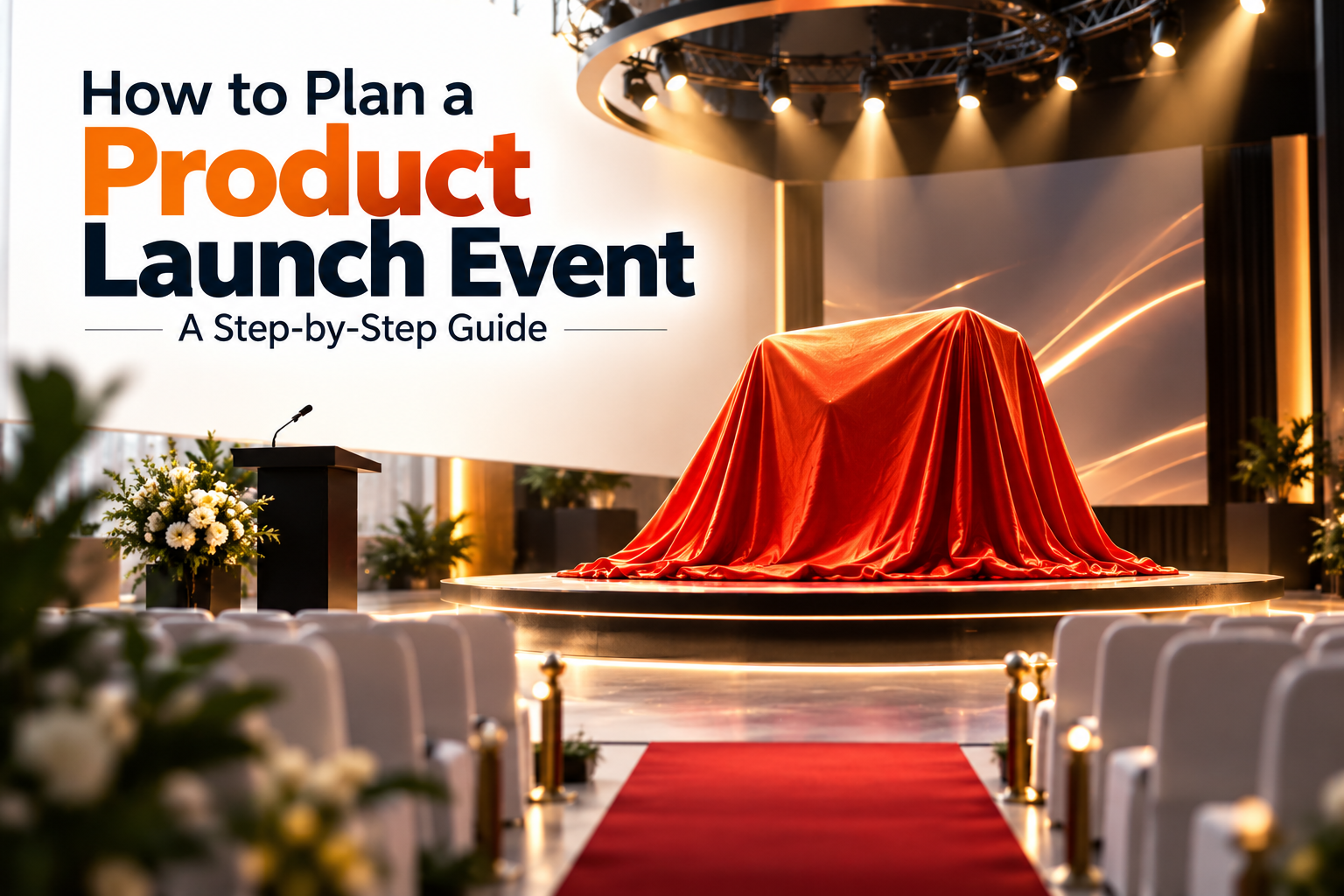
Launching a new product requires careful planning to ensure the right audience understands its value. From selecting a suitable venue to coordinating product demonstrations and technical production, every element should contribute to a clear and engaging launch experience.
A well-organised product launch event allows businesses to introduce new offerings, demonstrate important features and connect with customers, partners and industry stakeholders. The planning process becomes more effective when objectives, budgets, schedules and responsibilities are established in advance.
In this guide, we explore how to plan a product launch event, manage the essential arrangements and create an experience that supports your business goals.
1. Set Clear Objectives for Your Product Launch
Start by defining what your business wants to achieve. Your objectives might include introducing a new product, generating qualified leads, increasing brand awareness, attracting distributors or demonstrating a new technology.
Identify your target audience and understand what they need to learn about the product. For example, a launch aimed at business decision-makers may require detailed presentations and networking opportunities, while a consumer-focused event may benefit from product trials and interactive demonstrations.
Clear objectives help determine the event format, venue, programme and promotional strategy. They also provide a basis for evaluating the event’s results afterwards.
2. Choose the Right Product Launch Event Format
The event format should reflect your product, audience and budget.
- In-person launch: Allows attendees to experience the product directly and interact with company representatives.
- Virtual launch: Helps businesses reach audiences across different locations through online presentations and demonstrations.
- Hybrid launch: Combines an in-person gathering with online participation.
- Exclusive launch: Focuses on selected customers, investors, distributors, media representatives or business partners.
Consider the complexity of your product, the number of attendees and the type of interaction required before selecting a format.
For businesses that need support with planning and coordination, professional Product Launch Planning Services can help bring together the event concept, production requirements and logistics.
3. Establish a Realistic Event Budget
A detailed budget helps you allocate resources effectively and avoid unexpected expenses. The total cost will depend on the venue, guest count, production requirements and complexity of the launch.
Include the following items when preparing your budget:
- Venue rental and seating arrangements
- Stage design, branding and decorations
- Sound systems, lighting and display screens
- Product demonstration equipment
- Entertainment and host fees
- Catering and guest management
- Photography, videography and promotional materials
- Vendor charges and transportation
- Contingency funds for unexpected requirements
Obtain quotations from vendors and confirm exactly what each package includes. Track estimated and confirmed costs separately so that changes can be managed before they affect the overall budget.
Prioritise spending that improves the audience experience or supports the launch objectives. An elaborate stage is not always necessary if a simple, well-executed demonstration communicates the product’s value more effectively.
4. Create a Product Launch Planning Timeline
A planning timeline keeps tasks organised and helps the team identify potential delays early. The following is a sample schedule for a moderately sized event.
| Timeline | Main activities |
| 6–8 weeks before | Establish objectives, budget, audience and event format |
| 4–6 weeks before | Confirm the venue, vendors, theme and production requirements |
| 2–4 weeks before | Send invitations, prepare demonstrations and arrange promotional activities |
| 1 week before | Confirm attendance, review logistics and test equipment |
| 1–2 days before | Complete venue setup and rehearse the programme |
| Event day | Coordinate registration, presentations, entertainment and demonstrations |
| After the event | Follow up with attendees and evaluate results |
The timeline should be adjusted to suit the size and complexity of the launch. Events involving specialised equipment, software demonstrations or media participation may require additional preparation.
5. Select a Venue That Supports the Product Experience
The right venue should accommodate the audience and support the activities planned for the event. Consider accessibility, seating capacity, parking, power supply, internet connectivity and available audiovisual facilities.
Plan the layout around the attendee journey. Registration, seating, product displays and networking areas should be arranged so that guests can move comfortably between activities.
If attendees need to test the product, provide enough space for hands-on demonstrations. If the event includes a presentation, ensure that screens are visible and audio reaches the entire audience.
A suitable venue makes the event more convenient for guests and allows the product to remain the main focus.
6. Choose Product Launch Entertainment That Fits Your Brand
Entertainment can build anticipation and maintain audience interest, but it should support the launch rather than distract from the product.
Depending on the brand and audience, suitable options include:
- A professional emcee to guide the programme
- Live music during guest arrival or networking
- Creative lighting and audiovisual sequences for the product reveal
- Themed stage presentations that reflect the product’s identity
- Interactive activities that encourage meaningful audience participation
When selecting product launch entertainment, consider the event’s tone, audience preferences, venue limitations and available programme time.
Coordinate performances with the product announcement and demonstration schedule. Rehearse stage transitions, sound cues and lighting changes to avoid unnecessary interruptions.
The objective is to create a cohesive experience in which entertainment complements the product presentation and reinforces the brand message.
7. Prepare Technical Requirements and Product Demonstrations
Technical preparation is essential when a launch involves live demonstrations, digital presentations, specialised equipment or software.
Create a checklist of the equipment required, including microphones, speakers, screens, projectors, laptops, adapters and internet access. Test compatibility between devices and conduct a rehearsal before the event.
For the demonstration itself, prepare a sequence that explains the product’s main features and practical benefits. Avoid overwhelming attendees with too much information at once. Focus on the capabilities that matter most to your intended audience.
Prepare backup arrangements, such as offline presentation materials, spare equipment or a recorded demonstration, where appropriate.
Product Launch Event Planning for Tech Companies
Technology product launches often require additional technical preparation because the product experience may depend on software, network connectivity, device compatibility or live demonstrations.
Before the event, ensure that:
- Product features work as expected under demonstration conditions.
- Software, devices and presentation systems are compatible.
- Internet connectivity is reliable where online access is required.
- Display screens make technical information easy to understand.
- Backup materials are available in case a live demonstration fails.
- The demonstration explains the product’s value to both technical and non-technical attendees.
A carefully planned demonstration allows the audience to understand how the product works and why it matters, without letting technical complexity interrupt the presentation.
8. Promote the Event to the Right Audience
A product launch is more effective when the invitation reaches people who are likely to be interested in the offering.
Depending on your audience, promotion may include targeted email invitations, customer outreach, social media announcements, registration pages and direct communication with business partners.
Make the event details clear, including the product being introduced, date, venue and registration process. If media participation is planned, prepare approved product information and coordinate access to relevant speakers or demonstrations.
Monitor registrations and confirm attendance before the event. This helps the team plan seating, catering and demonstration capacity more accurately.
9. Coordinate Event-Day Operations
Successful execution depends on clear responsibilities, realistic timings and communication between the people involved.
Prepare an event-day schedule that includes registration, speaker arrivals, presentations, product demonstrations, entertainment and closing activities. Assign a responsible person to each task and confirm any equipment or vendor requirements in advance.
Your final operational checklist should include:
- Registration and guest assistance
- Stage, lighting and sound checks
- Presentation files and speaker coordination
- Product demonstration readiness
- Entertainment timings and stage transitions
- Vendor and catering arrangements
- Photography and videography requirements
- Backup arrangements for technical problems
Conduct a briefing with the event team before guests arrive so that everyone understands the schedule and knows how to respond if a change is needed.
Businesses looking for a Product Launch Event Management Company in Chennai can explore professional support for coordinating event planning, production, logistics and on-site execution.
10. Measure the Results and Follow Up
After the launch, review whether the event achieved its intended objectives. The most useful measurements depend on what the business wanted to accomplish.
Consider tracking:
- Registrations compared with actual attendance
- Product demonstrations or trials completed
- Qualified enquiries and potential business leads
- Attendee feedback and frequently asked questions
- Relevant media coverage and social engagement
- Follow-up meetings or sales opportunities
Send thank-you messages and requested product information to attendees. Direct interested prospects to the appropriate sales or business development team, and share approved event photographs or videos when useful.
Review the results with your team and document lessons for future launches. This helps improve planning decisions and makes it easier to identify which activities delivered the most value.
Product Launch Event Checklist
Before the event, review these essential tasks:
- Objectives and target audience confirmed
- Budget approved and vendor costs reviewed
- Venue booked and layout finalised
- Invitations sent and attendance checked
- Product presentation and demonstrations tested
- Sound, lighting, screens and internet checked
- Entertainment and programme timings confirmed
- Event-day responsibilities assigned
- Backup arrangements prepared
- Follow-up plan and measurement criteria established
Completing this checklist helps the team identify missing arrangements before they affect the launch.
Choosing the Right Product Launch Event Partner
Organising a launch involves coordinating creative planning, venue arrangements, technical production, entertainment and event-day operations. An experienced event partner can help manage these elements within an agreed schedule and budget.
When comparing providers, ask how they approach planning, product demonstrations, vendor coordination, technical rehearsals and contingency arrangements. Make sure the proposed approach matches your objectives and the needs of your audience.
For businesses evaluating Product Launch Event Planners in Chennai, focus on the provider’s planning process, communication and ability to coordinate the practical requirements of your event.
Plan Your Next Product Launch with Epix Entertainment
A successful product launch combines clear objectives, careful budgeting, relevant entertainment, reliable technical preparation and coordinated execution. Every decision should contribute to the product experience and help the audience understand the value of what is being introduced.
Epix Entertainment supports businesses with product launch event planning and execution, helping coordinate the arrangements needed to bring a launch concept to life.
Explore our product launch event management services in Chennai to discuss your event requirements and plan a launch that aligns with your product, audience and business goals.