
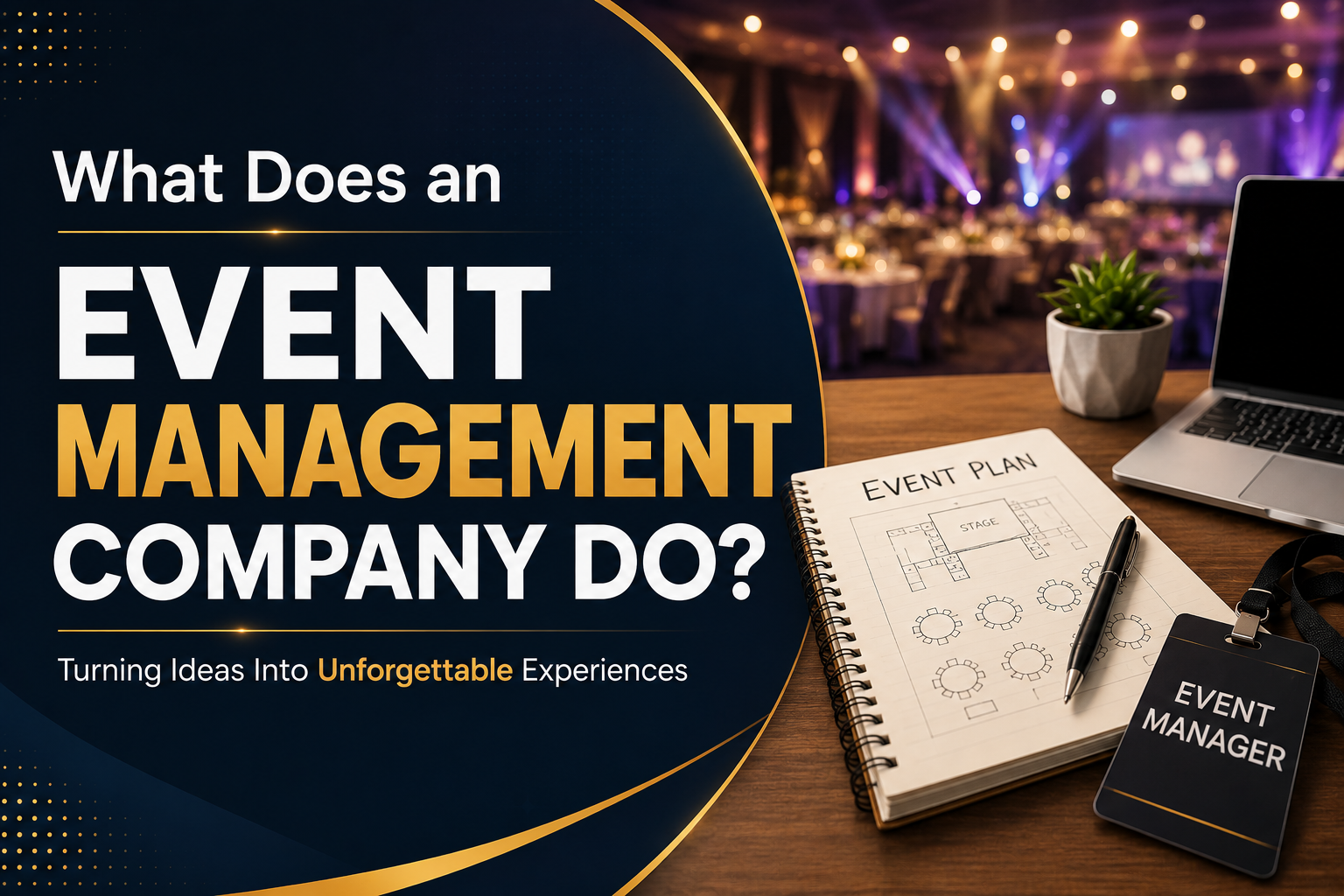
When guests enter a well-executed event, they typically notice the completed experience: the venue, the stage, the lighting, the program, and the energy in the room. What they rarely see is the effort that made it all possible.
A successful event is the result of a series of decisions, discussions, schedules, suppliers, and last-minute adjustments. Someone must shape the initial concept, understand the audience, coordinate various specialists, manage the venue, and ensure that everything comes together at the appropriate time.
An event management company can help in this situation. Its responsibilities extend beyond event planning. It is about transforming an objective into an experience that is creative, operational, and commercially viable.
It Starts With Understanding Why the Event Is Happening
An experienced event team will think about the purpose of the event before getting into discussions about venues, décor or entertainment.
A business may want to introduce a new product, rally its employees, meet with dealers and partners, celebrate an achievement or build relationships with customers. Different goals need different approaches.
The audience counts just as much. A senior executive event will have different expectations than an event for hundreds of employees or prospective customers.
Once the team understands these factors, they can then start to shape the format, scale, tone and experience. This early stage lays the foundation for everything that follows.
From an Idea to a Detailed Event Plan
A concept may sound simple on paper, but turning it into a real event requires detailed planning. The planning process can involve defining the event format, preparing timelines, allocating responsibilities, estimating requirements and establishing a working budget. The team also considers how different parts of the programme will connect with one another.
For example, a product launch may require a presentation, product reveal, media interaction, demonstrations, entertainment and guest networking. Each element needs its own preparation while still fitting into the overall schedule.
This is where a broad idea becomes an executable plan. Every major decision is considered in relation to time, audience, venue, resources and the intended outcome.
Bringing Venues, Suppliers and Logistics Together
An event rarely depends on one supplier. There may be production specialists, caterers, decorators, photographers, transportation providers, entertainers and technical teams involved at different stages.
Finding suitable suppliers is only the beginning. Their schedules, deliverables and responsibilities have to be coordinated carefully. Businesses looking for corporate event management companies in chennai may have particularly complex requirements involving venues, vendors, production and guest logistics. Having one experienced team coordinating these moving parts can simplify communication and reduce the risk of gaps between suppliers.
Venue planning is equally important. Capacity, accessibility, technical facilities, location, guest movement and the type of experience being created all influence whether a venue is appropriate.
Designing the Experience, Not Just the Setup
An event can be perfectly organised and still fail to make an impression. The experience needs to feel purposeful. Creative development plays a major role here. Stage design, lighting, audio-visual production, décor, branding, entertainment, and interactive elements can all influence how guests perceive the occasion.
Consider a product launch. The product itself may be the centrepiece, but the reveal, stage environment, presentation sequence, music, lighting and audience interaction can determine how memorable that moment becomes.
The creative elements should therefore support the story of the event rather than exist simply for decoration. The right balance can make an environment feel premium, energetic, welcoming, formal or celebratory depending on what the occasion requires.
Keeping Everything Moving on the Event Day
Planning is tested when the doors open. Guests begin arriving, speakers need to be ready, presentations have to run correctly, performers need their cues and production teams have to follow the programme precisely. Behind the scenes, several people may be communicating simultaneously to keep everything on track.
A corporate event management company can take responsibility for coordinating these activities from a central point. This includes managing schedules, communicating with suppliers, supporting speakers and performers, overseeing technical requirements and responding to changes as they happen.
The goal is for the audience to experience a smooth programme without being exposed to the operational complexity taking place backstage.
Preparing for the Unexpected
Even the most carefully prepared event can encounter an unexpected issue.
A speaker might be delayed. A technical component may need attention. A supplier could face a scheduling problem. An outdoor programme may be affected by weather. Guest numbers might change at short notice.
Experienced professionals prepare for such possibilities before the event begins. Backup arrangements, alternative schedules, additional equipment and clear escalation processes can make it easier to respond when circumstances change.
This is one of the less visible aspects of event management. Guests may never know that a problem occurred because the team resolved it before it affected the programme.
Good preparation does not mean expecting everything to go wrong. It means being ready enough to keep a small disruption from becoming a major one.
Connecting Event Activities With Business Objectives
For corporate events, the program should have a reason beyond simply filling a venue. An employee gathering might be intended to strengthen culture and recognize achievements. A dealer meet may focus on relationships, communication, and future business plans. A brand activation could be designed to increase awareness and encourage direct interaction with customers.
A corporate event management planner helps translate these objectives into practical decisions. The choice of format, messaging, activities, environment, and audience interaction should support what the business ultimately wants to achieve.
This also makes evaluation more meaningful. Depending on the event, businesses can consider attendance, participation, audience feedback, leads, engagement, or other measurable outcomes.
The Work Continues After Guests Leave
Once the final session ends, there are still responsibilities to complete.
Equipment needs to be dismantled, suppliers coordinated, venues cleared, and outstanding operational matters addressed. The team may also collect feedback, organize event photographs and videos, and review the results with the client.
This stage is often overlooked when people think about event management, but it can provide valuable information for future planning.
What did attendees respond to? Which parts of the program generated the most engagement? Were there operational bottlenecks? Did the event achieve its intended objective?
Answering these questions turns one event into useful learning for the next one.
When Does Professional Event Support Make Sense?
Not all events require an external event partner. Small internal meetings might be manageable by the internal team. The more complicated it is the more it seems that the need… Large guest lists, multiple suppliers, challenging production requirements, senior stakeholders, tight deadlines, and multi-location execution can all place a lot of pressure on an internal team.
This enables the organization to concentrate on its business objectives while specialists handle the operational needs of the event.
It’s more than just getting more people involved. It comes from having people who know how the different pieces need to work together and can be responsible for the overall execution.”
Conclusion
An event management company sits at the intersection of planning, creativity, production, logistics and execution. Its job is to take a business objective and build an experience around it, while ensuring that the practical details are managed from the first planning meeting through to the final post-event review.
The best results come when these different areas are treated as parts of one connected process rather than separate tasks.
With experience across corporate events, brand experiences, conferences, activations and large-scale productions, Epix Entertainment brings together the strategic and operational sides of event execution. By understanding the purpose behind each occasion and managing the details that guests may never see, Epix helps businesses create events that are organised, engaging and memorable.
For organisations planning their next important event, the right partner can make the difference between simply hosting an occasion and creating an experience that people remember.